Childcare Bookkeeping That Actually Helps You Run Your Daycare (Not Just “Do the Books”)

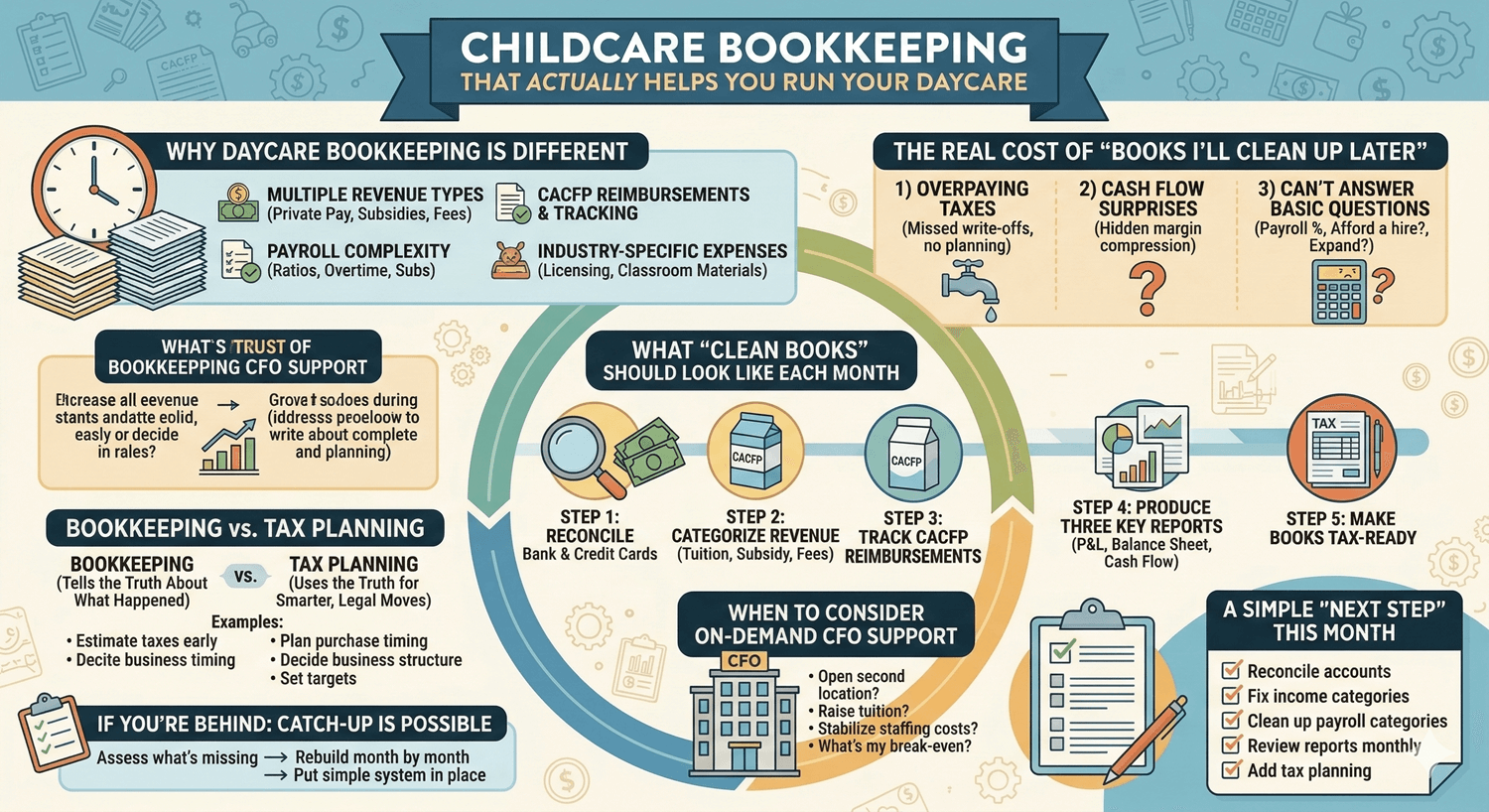
Running a childcare business is already a full-time job. Between staffing, enrollment, licensing requirements, parent communication, and daily operations, it’s easy for bookkeeping to become “whatever I can do after hours.” The problem is that messy or inconsistent books don’t just create tax-season stress—they can quietly drain cash, hide problems, and make it harder to grow.
Below is a practical, childcare-focused guide to what “good bookkeeping” looks like in real life—and how it connects to cash flow, compliance, and paying only what you legally owe in taxes.
Why daycare bookkeeping is different than most businesses
A daycare’s finances usually have more “moving parts” than people expect:
- Multiple revenue types (private pay, subsidies, registration fees)
- CACFP reimbursements (and the tracking that comes with them)
- Payroll complexity (ratios, scheduling changes, substitutes, overtime)
- Industry-specific expenses (licensing, inspections, classroom materials)
When your chart of accounts, categories, and monthly routines aren’t built for those realities, the results can be costly: missed deductions, unclear profitability, and unpleasant surprises when enrollment shifts.
The real cost of “books I’ll clean up later”
Even if your bank balance looks fine today, inconsistent bookkeeping tends to create predictable problems:
- 1) You overpay taxes (or you don’t know until it’s too late)
If income and expenses aren’t categorized correctly throughout the year, you can miss legitimate write-offs or fail to plan for quarterly payments. A proactive approach (not just filing a return) is what keeps more cash in the business legally.
- 2) Cash flow surprises hit harder in childcare
Enrollment can change quickly. If you don’t have clear monthly reporting, you may not see margin compression until it becomes a crisis.
- 3) You can’t confidently answer basic questions
Questions like these should be easy to answer:
- What did payroll cost as a % of revenue last month?
- Which program/classroom is most profitable?
- Can we afford another hire?
- Do we have room to expand—or should we stabilize first?
Without accurate month-to-month numbers, you’re forced to make big decisions on instinct.
What “clean books” should look like each month for a daycare
A strong monthly process doesn’t have to be complicated—but it must be consistent.
Step 1: Reconcile every bank and credit card account
Reconciliation is how you confirm the books match reality. If it’s not reconciled, you don’t truly know what your numbers mean.
Step 2: Categorize childcare revenue the right way
At minimum, separate:
- Private tuition
- Subsidy payments
- Registration/material fees
- Other income streams
This makes it much easier to see whether your core operations are healthy—and prevents confusion later when you’re planning taxes or applying for financing.
Step 3: Track CACFP reimbursements cleanly
CACFP money can look like “extra cash,” but it still needs proper accounting treatment so your reports stay accurate. When CACFP is recorded inconsistently, it can distort profit margins and make budgeting harder.
Step 4: Produce three reports that every childcare owner should read
You don’t need a finance degree. You need the right reports:
- Profit & Loss (P&L): Are you operating at a profit after payroll and overhead?
- Balance Sheet: What do you own vs. owe? How much cash cushion do you really have?
- Cash Flow view: Why did cash go up or down even if the P&L looks okay?
Step 5: Make the books “tax-ready” all year
When records are organized monthly, tax season becomes a review—rather than a scramble.
How bookkeeping connects to paying less in taxes (legally)
Bookkeeping and tax planning are not the same thing—but they should work together.
- Bookkeeping tells the truth about what happened.
- Tax planning uses that truth to make smarter, legal moves before the year ends.
Examples of what a proactive plan helps you do (in plain language):
- Estimate taxes early and avoid panic payments
- Plan purchases/timing so deductions count in the right year
- Decide if your business structure still fits your goals
- Set targets for revenue, payroll, and owner pay based on real margins
When to consider on-demand CFO support for a childcare business
Many daycare owners hit a point where bookkeeping alone isn’t enough. You might be asking:
- Should I open a second location?
- Can we raise tuition without hurting enrollment?
- How do I stabilize staffing costs?
- What’s my break-even enrollment?
That’s the gap CFO-level strategy fills—helping childcare centers plan, price, and scale without hiring a full-time CFO.
If you’re behind: catch-up is possible (and common)
If your books are months behind—or you’re behind on tax filings—you’re not alone. The important thing is to stop the spiral:
- Assess what’s missing
- Rebuild month by month
- Put a simple system in place so you don’t fall behind again
A simple “next step” if you want cleaner finances this month
If you want results fast, focus on this order:
- Reconcile accounts
- Fix income categories (private pay vs subsidy vs fees)
- Clean up payroll and staffing-related categories
- Review your P&L and cash flow monthly
- Add tax planning so you’re not reacting at year-end